Gardening Aches and Pains: How to Protect Your Back, Knees and Shoulders
June is one of the busiest times of year in the garden. The grass is growing, borders need attention, pots need lifting, hedges need trimming and weeds seem to appear almost overnight.
Gardening is a brilliant way to stay active. It gets you outside, keeps you moving and can be very good for both physical and mental wellbeing. But it can also be surprisingly demanding on the body.
At The Physio Therapy Centre in Haywards Heath, we often see people with back, knee, shoulder or neck pain that has flared up after a busy weekend in the garden. It might start as a small ache after bending or lifting, but if ignored, it can become uncomfortable enough to affect walking, sleeping, sitting or everyday movement.
The good news is that a few small changes can make gardening much easier on your body.
Why gardening can cause aches and pains
Gardening often involves movements we do not do for long periods in normal daily life. Bending forward to weed, kneeling to plant, twisting while lifting, reaching overhead to prune, pushing a mower or carrying heavy bags of compost can all place strain on muscles and joints.
The problem is not usually one single movement. More often, it is the length of time spent in awkward positions. You may not notice much while you are doing it, but a few hours later, or the next morning, your back, knees or shoulders may start to complain.
This is particularly common if you suddenly do a lot more than usual. A full day in the garden after a quiet few weeks can be a big jump for the body.
Lower back pain after gardening
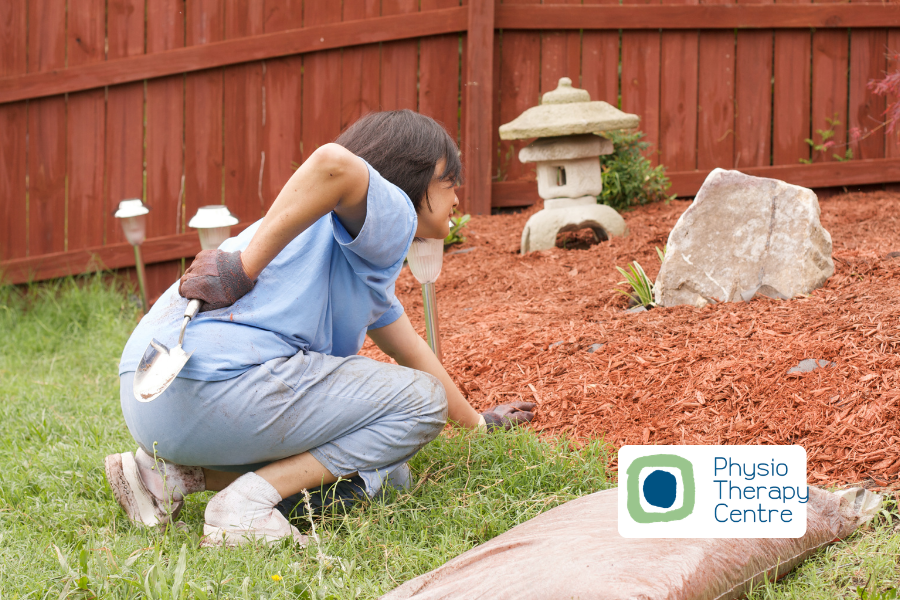
Lower back pain is one of the most common gardening-related problems. Weeding, digging, lifting pots and leaning over flower beds can all irritate the lower back, especially if you stay in one position for too long.
A useful rule is to avoid treating gardening as one long task. Break it up. Change position often. Move from weeding to watering, then to pruning, then to sweeping. This gives different parts of the body a chance to recover.
When lifting, try to keep the load close to you and avoid twisting at the same time. Heavy pots, compost bags and watering cans are often better moved in smaller loads rather than one big effort.
Knee pain from kneeling and squatting
Knees can also become irritated during gardening, particularly with prolonged kneeling, squatting or repeated getting up and down from the ground.
Using a kneeling pad, garden stool or raised bed can make a big difference. It is also worth changing position regularly rather than spending long periods kneeling in one spot.
If your knees are already sensitive, try planning the garden jobs so the low-level tasks are spread out rather than done all at once.
Shoulder and neck pain from reaching
Pruning, hedge trimming, raking and lifting can all place strain on the shoulders and neck, particularly if your arms are held away from your body or overhead for long periods.
Try to keep tasks at a comfortable height where possible. Use long-handled tools if they help you avoid overreaching, but be careful not to use them in a way that makes you twist awkwardly.
If you are trimming or pruning, take regular pauses and change sides where you can. Repeatedly working with one arm can quickly overload the shoulder and upper back.
Warm up before you start
It may sound strange to warm up before gardening, but it makes sense. Gardening is physical activity, and your body will cope better if you ease into it.
A short walk around the garden, a few gentle shoulder rolls, some easy back movements and a few sit-to-stands from a chair can help prepare your muscles and joints.
You do not need anything complicated. Just avoid going straight from sitting indoors to heavy digging or lifting.
Pace yourself
One of the biggest causes of gardening injuries is simply doing too much in one go.
It is easy to get carried away, especially when the weather is good. But several shorter gardening sessions are usually better than one long session that leaves you stiff and sore for days.
Try setting a time limit for heavier jobs. Stop before you are exhausted. Leave some tasks for another day. Your garden does not need to be finished in one afternoon.
When gardening pain should not be ignored
Some stiffness after gardening can be normal, especially if you have done more than usual. But pain that keeps returning, lasts more than a few days, wakes you at night, causes swelling, or stops you moving normally should be checked.
It is also worth getting help if you notice pain travelling down the leg or arm, pins and needles, numbness, weakness, or pain that is becoming more frequent.
At The Physio Therapy Centre in Haywards Heath, our physiotherapists and sports therapists can assess what is causing your symptoms and help you recover properly. Treatment may include hands-on therapy, exercise rehabilitation, strengthening work, mobility advice and practical guidance on how to keep gardening without repeatedly flaring things up.
Keep enjoying your garden
Gardening should be something you enjoy, not something that leaves you struggling afterwards.
With a little planning, regular changes of position and sensible pacing, you can reduce the strain on your back, knees, shoulders and neck while still getting the jobs done.
If gardening has left you with pain that is not settling, we can help.
Book an appointment with The Physio Therapy Centre in Haywards Heath and let us help you stay active in the garden this summer.