Stiffness as you get older is common, but understanding why it happens can help you maintain flexibility and move more comfortably.
For many of us, these everyday movements become a little less comfortable as we get older. Perhaps your hamstrings feel tighter, your shoulders don’t move quite as freely, or you wake up feeling stiff until you’ve been moving around for a while.
It’s easy to put this down to getting older and assume there’s not much you can do about it.
But while our bodies naturally change with age, losing flexibility isn’t necessarily something we simply have to accept.
What Causes Stiffness as You Get Older?
There are several reasons why we might notice increasing stiffness as the years go by.
Our muscles, tendons and other tissues change over time, and we may experience a gradual reduction in joint range of movement.
However, ageing is only part of the story.
How we spend our days can be just as important.
Many of us spend hours sitting at desks, driving, watching television or looking at screens. Even those who exercise regularly may find themselves repeating the same movements without giving much attention to flexibility.
Over time, we can become less accustomed to moving our joints through their full comfortable range.
And when certain movements start to feel difficult, we may naturally avoid them, reducing opportunities to maintain our mobility.
The good news is that regular movement, appropriate stretching and strengthening exercises can all play a part in keeping us mobile.
It’s Not Just About Touching Your Toes
When people think about flexibility, they often imagine gymnasts or people performing impressive yoga positions.
But flexibility has a much more practical role in everyday life.
Think about some of the movements we take for granted:
- Turning your head comfortably when reversing the car.
- Reaching overhead to put something in a cupboard.
- Bending down to put on socks and shoes.
- Getting in and out of the car.
- Walking up stairs or taking longer strides.
- Enjoying gardening, golf, walking or other favourite activities.
Being able to move comfortably through these everyday activities helps us maintain confidence and independence.
And it’s not about becoming exceptionally flexible. It’s about maintaining enough comfortable movement to do the things you enjoy.
Can You Improve Flexibility at Any Age?
In many cases, yes.
Although everyone’s starting point is different, people can often improve their flexibility and range of movement through consistent, appropriate activity.
You don’t need to spend an hour a day stretching or become a yoga enthusiast.
Even small changes can make a difference.
Getting up regularly when working at a desk, walking more frequently and gently moving stiff joints through comfortable ranges can all help you stay active.
Stretching exercises may also be useful, especially when practised consistently rather than just occasionally.
It’s worth remembering that flexibility is only one part of good mobility. Muscle strength, balance and confidence in movement matter too.
That’s why our Rehabilitation & Exercise services can also be valuable for people wanting to maintain or improve their physical abilities.
Why Does Stretching Sometimes Feel So Difficult?
Have you ever tried stretching your hamstrings, only to find yourself struggling to reach the right position?
Or attempted a shoulder stretch without being quite sure whether you’re doing it correctly?
You’re certainly not alone.
Some stretches can be awkward to perform independently. It may be difficult to relax the muscles you’re trying to stretch, maintain a comfortable position or judge how far to move.
And if you’re already feeling stiff, trying to stretch can sometimes feel like hard work.
This is one reason why some people enjoy Assisted Stretching.
What Is Assisted Stretching?
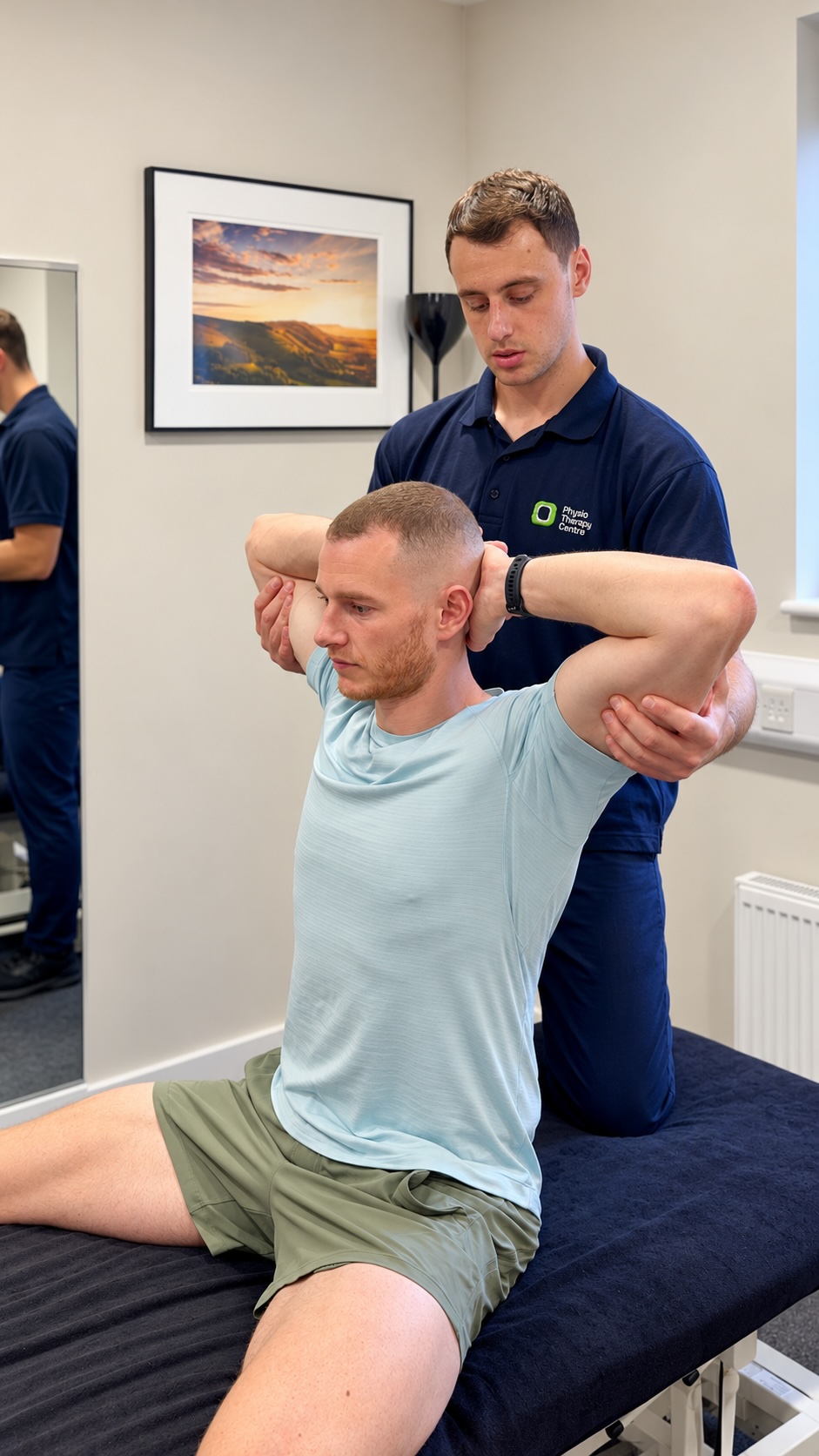
Assisted Stretching involves a trained therapist gently guiding and supporting your body through a series of controlled stretches.
Rather than trying to reach and hold every position yourself, you have someone helping you perform the movements while adjusting them to your individual comfort and flexibility.
The aim is to help improve or maintain range of movement while reducing feelings of muscle tightness and stiffness.
Sessions can focus on particular areas, such as the hips, hamstrings, shoulders or back, depending on what you’d like to work on.
Assisted Stretching isn’t just for sportspeople or those recovering from an injury. It’s also an option for people who simply want to feel more comfortable moving.
And importantly, stretching shouldn’t be forced or excessively painful.
Introducing Assisted Stretching at The Physio Therapy Centre
We’re pleased to introduce a new service at our Haywards Heath clinic, provided by Chris Dumbrell, our Sports & Rehabilitation Therapist.
Chris has undertaken specialist training in assisted clinical stretching techniques and now offers personalised one-to-one sessions.
Whether you’re looking to improve your flexibility, address feelings of tightness or simply try something new to support your mobility, Chris can tailor your appointment to your needs.
There are two options:
30-minute Assisted Stretching – £40
Ideal for concentrating on one or two particular areas or trying Assisted Stretching for the first time.
45-minute Assisted Stretching – £50
A longer session with more time to work through different stretches and areas of the body.
You don’t need a referral, and you don’t have to be injured to book.
Find out more about Assisted Stretching in Haywards Heath.
When Is Physiotherapy More Appropriate?
Although feeling a little stiffer with age is common, not all stiffness should be assumed to be age-related.
If you’re experiencing persistent or worsening pain, significant restriction in movement, swelling, weakness or other unexplained symptoms, it’s important to establish what’s causing them.
Our Physiotherapy team can assess your symptoms and recommend an appropriate approach.
Assisted Stretching is intended to support flexibility and mobility, rather than replace assessment or treatment of an underlying medical condition.
A Little More Movement Can Go a Long Way
Perhaps the most important message is that it’s never too late to start paying attention to how well you move.
You don’t need to be able to touch your toes, and you certainly don’t need to perform complicated stretches.
Maintaining flexibility is about helping your body move comfortably, confidently and as freely as possible throughout everyday life.
If you’ve noticed yourself becoming a little stiffer over the years, why not do something about it?
Chris offers friendly, personalised Assisted Stretching appointments at The Physio Therapy Centre in Haywards Heath, with free onsite parking.
Discover Assisted Stretching and book your appointment
Or call our reception team on 01444 450162 to find out more.