
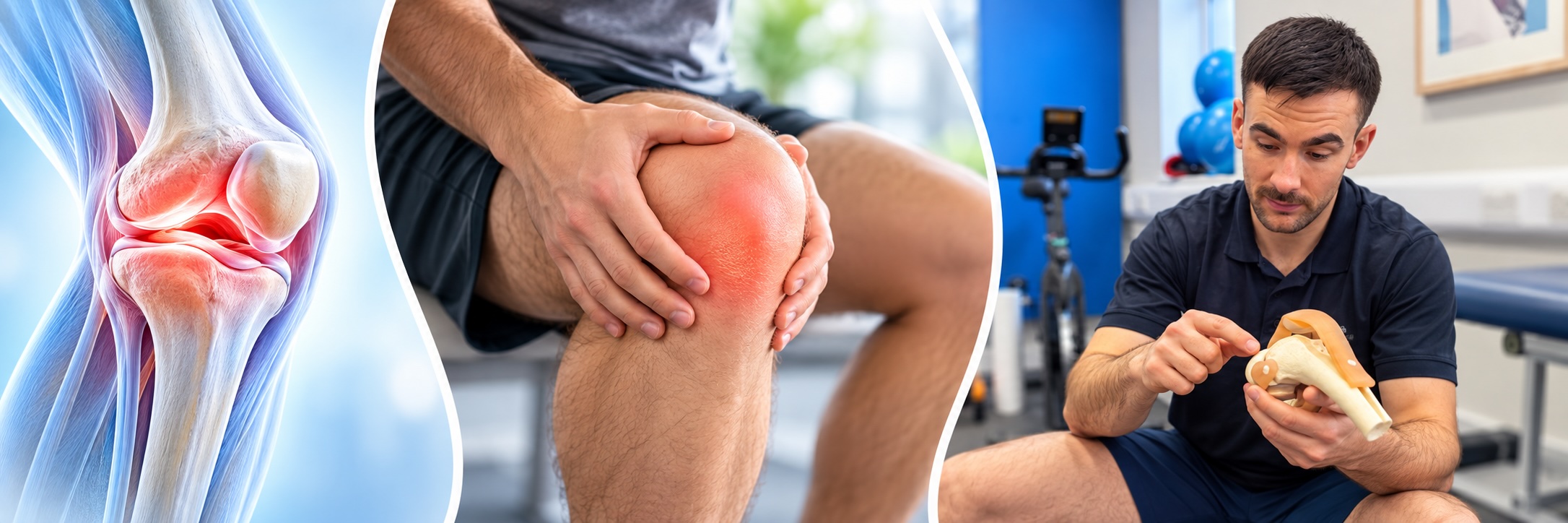
Knee Pain Treatment in Haywards Heath
Struggling with knee pain when walking, climbing stairs, exercising or simply getting around? Our experienced team is here to help.
Knee pain can make everyday life frustrating. Whether you’ve recently injured your knee, developed discomfort while exercising or have been struggling with stiffness and pain for some time, it can affect your confidence and mobility.
At The Physio Therapy Centre in Haywards Heath, we provide individual assessment, hands-on treatment where appropriate and personalised rehabilitation to help you manage knee pain and return to the activities you enjoy.
Our physiotherapists treat a wide range of knee conditions, from arthritis and ongoing joint problems to injuries sustained during sport or exercise.
Same-day and urgent appointments are available, subject to availability, and we have free onsite parking.
What Causes Knee Pain?
The knee is a complex joint involving bones, cartilage, ligaments, tendons and muscles. Pain can develop when one or more of these structures becomes injured or irritated.
Sometimes knee pain follows a particular incident, such as twisting the knee while playing sport or falling onto it. In other cases, symptoms develop gradually, without an obvious injury.
Common causes of knee pain include:
Osteoarthritis – changes within the knee joint that may cause pain, stiffness and difficulty with everyday activities.
Meniscus injuries – problems affecting the cartilage structures that help distribute forces within the knee.
Ligament injuries – including injuries to the anterior cruciate ligament (ACL) or other ligaments supporting the knee.
Patellofemoral pain – discomfort around or behind the kneecap, often aggravated by stairs, squatting or running.
Tendon problems – including patellar tendon pain associated with jumping, running or repeated loading.
Muscle weakness or reduced physical capacity – which can contribute to difficulties with certain movements and activities.
Not all knee pain indicates significant joint damage. An appropriate assessment can help identify likely contributing factors and guide treatment.
How Can Physiotherapy Help Knee Pain?
Physiotherapy aims to help you understand your knee symptoms, improve comfortable movement and regain strength and confidence.
Your physiotherapist will begin by discussing when your symptoms started, what makes them better or worse and how your knee pain affects your everyday activities.
An assessment may include examining your knee movement, strength, balance and walking pattern, alongside relevant clinical tests.
Depending on your symptoms, treatment may include:
Advice and education – helping you understand your condition and manage symptoms.
Hands-on treatment – where appropriate, to help with pain and movement.
Strengthening exercises – targeting muscles that support your knee and lower limb.
Mobility exercises – helping improve or maintain comfortable movement.
Balance and functional exercises – supporting everyday activities such as walking and managing stairs.
Progressive rehabilitation – helping you gradually return to exercise, sport or other activities.
There is no single treatment programme that suits everyone.
We’ll develop an approach based on your condition, abilities and personal goals, adapting your exercises as you progress.
Knee Pain Self-Help – What Can You Try at Home?
If you’re experiencing knee pain, there are some simple steps that may help ease discomfort while arranging an assessment.
1. Keep Gently Active
Unless you’ve sustained a significant injury, completely avoiding movement is rarely necessary.
Try to maintain comfortable activities such as short walks, gentle knee movements or everyday tasks that don’t significantly aggravate your symptoms.
If walking is painful, reducing the distance temporarily and taking breaks may help.
2. Adjust Aggravating Activities
If certain activities are making your knee particularly uncomfortable, consider temporarily reducing their intensity or frequency.
For example, you might shorten your walks, reduce the depth of squats or avoid repeated stair climbing where practical.
The aim is usually to modify activity rather than stop moving altogether.
3. Try Gentle Knee Movements
While seated, slowly straighten your knee as far as is comfortable, then lower your foot again.
You can also gently bend and straighten the knee while sitting or lying down.
Start with a few comfortable repetitions, avoiding movements that significantly increase pain.
These exercises aren’t suitable for every injury, particularly following recent surgery, so follow any medical restrictions you’ve been given.
4. Consider Ice or Warmth
If your knee is swollen or uncomfortable following activity, a cold pack wrapped in a towel may provide temporary relief.
For stiffness without significant swelling, some people prefer gentle warmth.
Try 10–15 minutes at a time, checking your skin regularly. Avoid hot or cold packs over areas with reduced sensation.
5. Don’t Push Through Significant Pain
Some discomfort during rehabilitation can be normal, but forcing painful movements or repeatedly aggravating symptoms isn’t necessarily helpful.
If your knee becomes more painful or swollen following activity, consider reducing the intensity and seek advice if symptoms persist.
Remember: These suggestions are for general, temporary symptom management. If you’ve suffered a significant injury, cannot bear weight, have a visibly deformed knee or develop a hot, very swollen joint with fever, seek urgent medical assessment rather than waiting for a routine appointment.
Knee Pain and Osteoarthritis
Knee osteoarthritis is common, particularly as we get older, although it can affect younger adults too.
Symptoms may include stiffness after resting, discomfort when walking or climbing stairs, and difficulty with activities such as kneeling or getting up from a chair.
Although osteoarthritis involves changes within the joint, this doesn’t mean you should stop exercising.
Appropriate strengthening and regular physical activity are among the most useful ways to manage knee osteoarthritis.
Our physiotherapists can help you develop a programme to improve leg strength, maintain mobility and make everyday activities more manageable.
For people who would benefit from supervised exercise, we also offer one-to-one rehabilitation and small-group Rehabilitation & Exercise classes at our Haywards Heath clinic.
Knee Injuries and Sport
Knee pain can affect people who run, cycle, play football, padel or other sports, as well as those who enjoy regular gym training.
Some injuries happen suddenly, such as a ligament sprain or twisting injury. Others develop gradually as training demands increase.
Recovering successfully often involves more than allowing the initial pain to settle.
Building strength, improving balance and gradually increasing your ability to tolerate sporting activity can help support a confident return to exercise.
Alongside our physiotherapy team, Chris, our Sports & Rehabilitation Therapist, provides Sports Therapy, injury assessment and individual exercise rehabilitation.
Chris can help with appropriate sports injury management, strength programmes and gradual return-to-sport planning.
Find out more about our Sports Injury Treatment & Rehabilitation service.
What Happens at Your First Appointment?
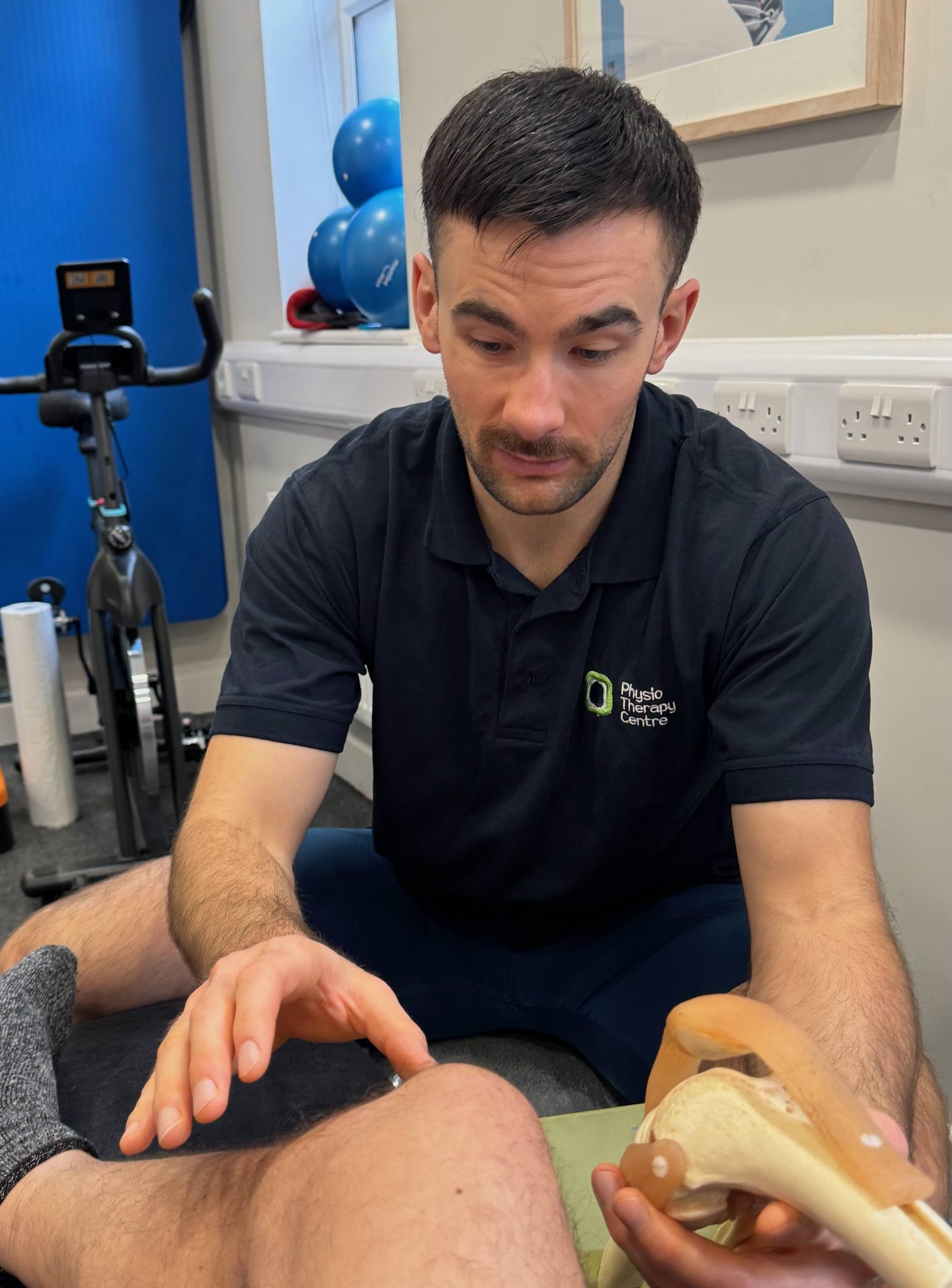
Your initial physiotherapy appointment at The Physio Therapy Centre lasts 45 minutes and costs £70.
We’ll begin by discussing your knee symptoms, medical history and how your condition is affecting everyday activities.
Your physiotherapist will then assess your knee movement, strength and other relevant findings to help understand your problem.
We’ll explain our findings, discuss treatment options and develop a plan tailored to your needs.
Where appropriate, hands-on treatment and rehabilitation exercises can begin during your first appointment.
Follow-up physiotherapy appointments last 30 minutes and cost £64.
Our aim is to help you make progress without arranging more appointments than you need.
If a Sports Therapy appointment with Chris is more appropriate, our reception team can help you choose the right service.
Frequently Asked Questions
An initial physiotherapy assessment and treatment appointment costs £70 for 45 minutes.
Follow-up appointments cost £64 for 30 minutes.
We also offer Sports Therapy with Chris, including a 45-minute initial appointment for £60 and 30-minute follow-up appointments for £60.
Yes. At The Physio Therapy Centre, we also offer Home Visit Physiotherapy for patients who would prefer to receive treatment in their own homes or find travelling to our Haywards Heath clinic difficult.
Home visits can be particularly helpful for people recovering from knee surgery, older adults experiencing mobility difficulties or anyone whose knee pain makes getting out and about challenging.
Our physiotherapists can assess your knee, provide appropriate treatment and develop a personalised rehabilitation programme to help improve your strength, mobility and confidence.
Find out more about our Home Visit Physiotherapy service.
In many cases, gentle exercise and appropriate strengthening are helpful.
However, the type and amount of exercise should be suited to your symptoms and condition.
Your physiotherapist can advise you on suitable exercises and how to gradually progress them.
Physiotherapy can be appropriate for many meniscus injuries, particularly where surgery is not immediately required.
Treatment may focus on improving movement, rebuilding strength and gradually returning to normal activities.
Some injuries require further medical or surgical assessment, so an individual examination is important.
Yes. Physiotherapy can help people with knee osteoarthritis improve strength, maintain mobility and manage everyday activities more comfortably.
Exercise, education and appropriate activity management are important parts of treatment.
We offer same-day and urgent physiotherapy appointments, subject to availability.
Call 01444 450162 to discuss the earliest available appointment.
If you’ve sustained a serious injury, cannot bear weight or have developed a hot, swollen knee with fever, seek urgent medical assessment.
Ready to Get Help With Your Knee Pain?
Whether your knee pain has recently started or has been affecting you for some time, our experienced team can help you understand your symptoms and work towards moving more comfortably.
At The Physio Therapy Centre in Haywards Heath, we offer personalised physiotherapy, Sports Therapy and exercise rehabilitation, with convenient free onsite parking.
Call our friendly reception team on 01444 450162. Or book online