
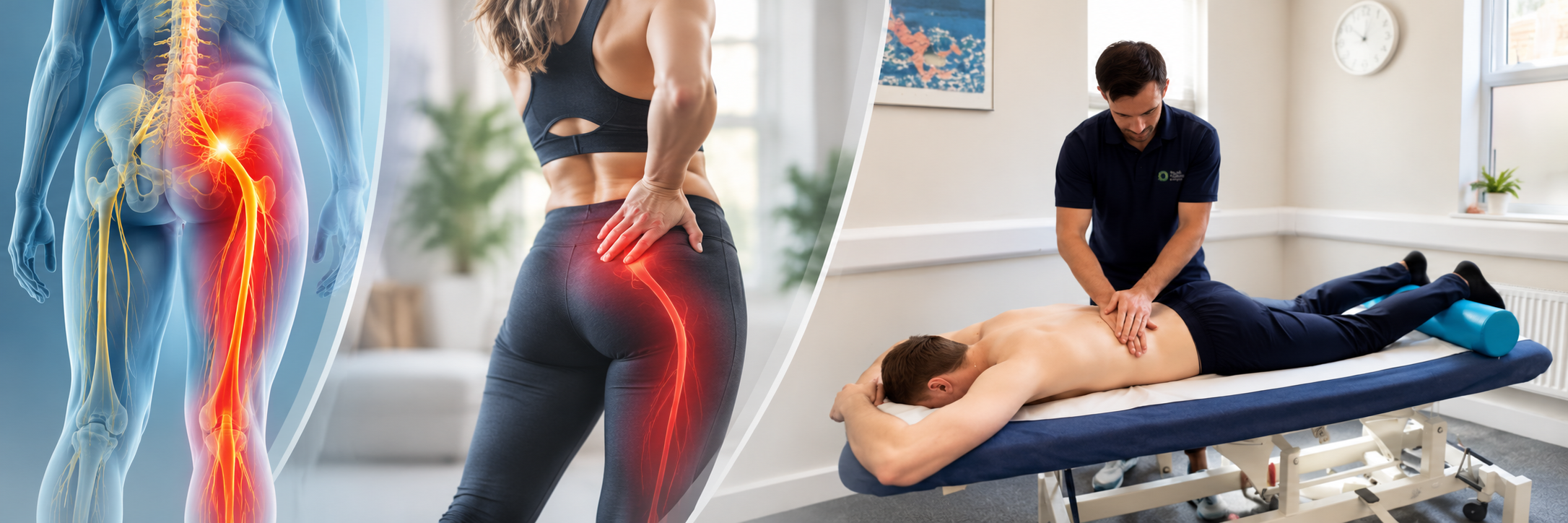
Sciatica Treatment in Haywards Heath
Suffering from pain travelling from your lower back into your buttock or leg? Our experienced physiotherapists are here to help.
Sciatica can be extremely uncomfortable, making everyday activities such as sitting, walking, sleeping or getting dressed difficult.
Whether your symptoms have appeared suddenly or have been troubling you for some time, physiotherapy can help you understand what’s happening, manage your pain and work towards moving more comfortably.
At The Physio Therapy Centre in Haywards Heath, we provide individual assessment, hands-on treatment where appropriate and personalised exercise rehabilitation for people experiencing sciatica.
Same-day and urgent appointments are available, subject to availability, and we have free onsite parking.
What Is Sciatica?
Sciatica describes symptoms caused by irritation or compression of a nerve in the lower back that contributes to the sciatic nerve, which travels down the leg.
Unlike ordinary lower back pain, sciatica typically causes symptoms that travel into the buttock and down one leg, sometimes reaching the calf, foot or toes.
Common symptoms of sciatica include:
Shooting or burning pain travelling down the leg.
Pins and needles or tingling in the buttock, leg or foot.
Numbness or altered sensation in parts of the leg.
Muscle weakness in some cases.
Pain aggravated by certain movements or positions, such as prolonged sitting, bending, coughing or sneezing.
You may also experience lower back pain, although sometimes the leg pain is considerably worse than the discomfort in your back.
Not all pain travelling into the leg is sciatica, which is why an appropriate assessment is important.
What Causes Sciatica?
Sciatica occurs when a nerve in the lower spine becomes irritated or compressed.
One common cause is a bulging or herniated intervertebral disc, sometimes referred to as a slipped disc.
Other possible causes include age-related changes in the spine, narrowing around the nerves and certain spinal conditions.
However, changes visible on an MRI scan don’t necessarily mean they’re responsible for your symptoms.
Your physiotherapist will consider your medical history, symptoms and physical examination findings to help determine the most appropriate treatment approach.
The good news is that many cases of sciatica improve over time without surgery, although recovery can vary considerably between individuals.
How Can Physiotherapy Help Sciatica?
Our approach focuses on helping you manage your symptoms, restore comfortable movement and gradually return to normal activities.
Your physiotherapist will begin by discussing your symptoms, including where you experience pain, whether you have tingling or numbness, and how your condition affects everyday life.
A physical assessment may include examining your spinal movement, leg strength, sensation and other relevant neurological findings.
Depending on your individual circumstances, treatment may include:
Advice and reassurance – helping you understand your symptoms and how to manage them.
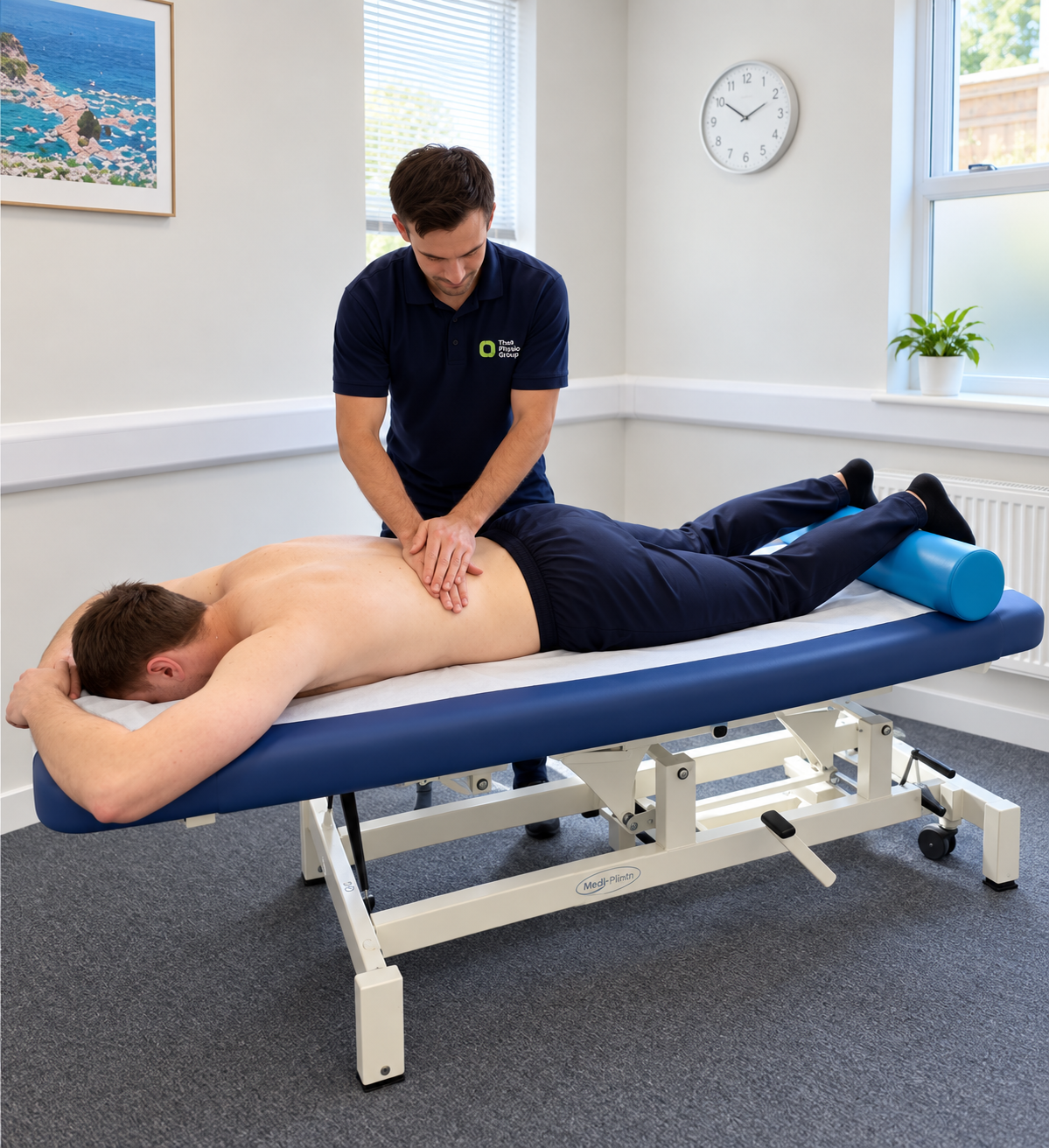
Hands-on treatment – where appropriate, to help with associated stiffness and discomfort.
Individualised exercises – designed to improve comfortable movement and gradually restore strength.
Practical guidance – advice about sitting, sleeping, walking, working and daily activities.
Progressive rehabilitation – helping you rebuild confidence and return to normal exercise and activity.
There is no single exercise or treatment technique that works for everyone with sciatica.
We’ll tailor your treatment to your symptoms and abilities, adjusting your rehabilitation programme as you improve.
Find out more about our Physiotherapy services in Haywards Heath, including what to expect from your first appointment.
Sciatica Self-Help – What Can You Try at Home?
If you’re experiencing sciatica, there are some simple things you can try to ease discomfort while arranging an assessment.
1. Keep Gently Moving
Although your instinct may be to rest completely, prolonged bed rest is generally not helpful.
Try short, comfortable walks around your home or outside if you’re able.
You may find that several short walks throughout the day feel better than one longer walk.
2. Change Position Regularly
Remaining seated or standing in one position for too long can aggravate symptoms.
Try changing position regularly and taking short movement breaks.
If sitting makes your leg pain worse, reduce the amount of time you spend sitting continuously.
3. Find a Comfortable Resting Position
Some people find temporary relief lying on their back with pillows underneath their knees.
Others prefer lying on their side with a pillow between their knees.
Neither position is right for everyone. Choose whichever feels most comfortable and avoid remaining in bed for prolonged periods.
4. Try Gentle Warmth
A warm pack or hot water bottle wrapped in a towel may help ease associated muscle tension and discomfort.
Try using warmth for around 10–15 minutes, checking your skin regularly and avoiding excessive heat.
Do not apply heat to areas affected by numbness or reduced sensation.
5. Avoid Forcing Painful Stretches
You may have seen online videos promoting strong hamstring or sciatic nerve stretches.
However, aggressive stretching can sometimes aggravate an irritated nerve.
Rather than forcing a movement, stick to gentle activities that feel comfortable until you’ve been assessed.
Remember: These suggestions are intended to provide temporary relief and won’t be appropriate for everyone. Stop activities that significantly worsen your symptoms.
Most cases of sciatica are not serious. However, new bladder or bowel problems, numbness around the groin or saddle area, or significant new or worsening leg weakness require urgent medical assessment rather than waiting for a physiotherapy appointment. New bladder or bowel dysfunction or saddle numbness should be assessed immediately in A&E.
What Happens at Your First Appointment?
Your initial physiotherapy appointment at The Physio Therapy Centre lasts 45 minutes and costs £70.
We’ll begin by discussing your symptoms, medical history and how your sciatica is affecting everyday activities.
Your physiotherapist will then carry out an appropriate physical assessment, which may include checking your spinal movement, leg strength, sensation and nerve function.
We’ll explain our findings, discuss your treatment options and provide practical advice to help manage your symptoms.
Where appropriate, hands-on treatment and exercises can begin during your first appointment.
Follow-up appointments last 30 minutes and cost £64.
Our aim is to help you make progress without arranging more appointments than you need.
Frequently Asked Questions
At The Physio Therapy Centre in Haywards Heath, an initial physiotherapy assessment and treatment appointment costs £70 for 45 minutes.
Follow-up appointments cost £64 for 30 minutes.
Your physiotherapist will discuss whether further treatment would be helpful following your assessment.
Many people experience improvement over several weeks, although recovery can take a few months and sometimes longer.
The duration depends on factors including the cause of the symptoms, their severity and your individual circumstances.
Your physiotherapist can assess your condition and help you develop a suitable management plan.
Yes. Many cases of sciatica improve over time without surgery or extensive treatment.
However, physiotherapy can be helpful when symptoms are affecting your daily life, when you’re unsure how to remain active or when recovery is taking longer than expected.
Gentle walking is often helpful, provided it doesn’t significantly aggravate your symptoms.
Start with short distances that you can manage comfortably, taking breaks when needed.
Your physiotherapist can advise you on gradually increasing activity.
We offer urgent and same-day physiotherapy appointments, subject to availability.
Call our reception team on 01444 450162 to discuss the earliest available appointment.
If you experience new bladder or bowel dysfunction, numbness around the saddle area or significant new or worsening leg weakness, seek urgent medical assessment rather than waiting for a routine appointment.
Ready to Get Help With Your Sciatica?
Whether your sciatica has recently started or you’ve been struggling with persistent symptoms, our team is here to help.
At The Physio Therapy Centre in Haywards Heath, we offer personalised assessment, treatment and rehabilitation, with free onsite parking and urgent appointments subject to availability.
Call our friendly reception team on 01444 450162. Or book online