By Chris Dumbrell, Sports Therapist at The Physio Therapy Centre, Haywards Heath
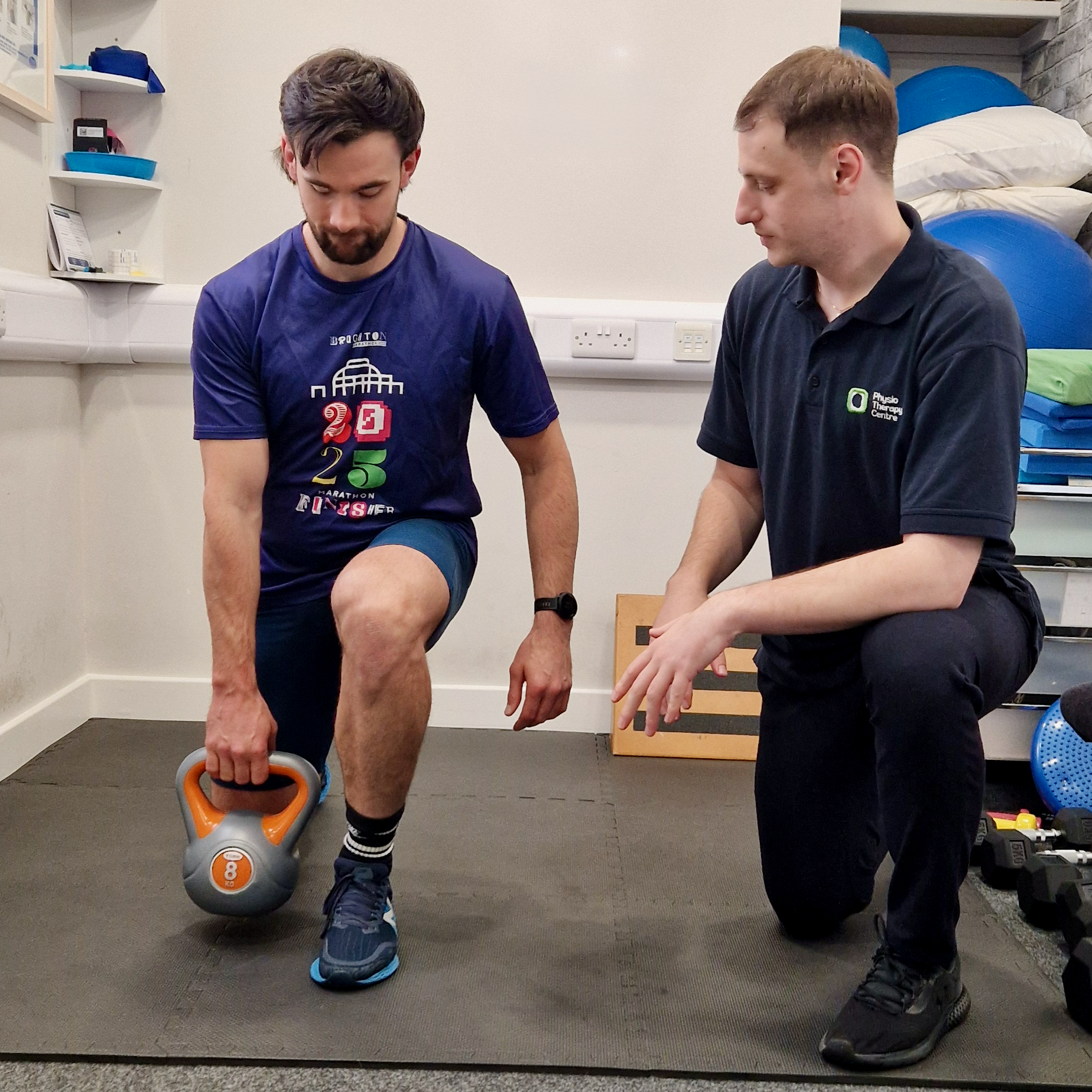
Lower-limb injuries are incredibly common — whether from sport, daily activity, overuse, slips and falls, or longer-term degenerative conditions such as osteoarthritis that may eventually require surgery. These injuries can affect the hip, knee, ankle or foot, and while rest plays a role early on, long-term recovery depends on a structured, progressive and personalised rehabilitation plan.
At The Physio Therapy Centre in Haywards Heath, we regularly see how the right rehab programme restores strength, confidence, mobility and overall function — while the wrong approach can lead to ongoing stiffness, weakness, pain or recurrent injury.
Rehabilitation is not a standardised set of exercises. It must be tailored to the individual and the specific injury to help you return to the activities you enjoy.
Preventing Muscle Weakness and Atrophy
After an injury, it’s completely normal to reduce movement — but this quickly leads to muscle weakness and atrophy. Weak muscles mean less stability around the affected joint, making everyday tasks harder and slowing healing.
A targeted rehabilitation programme helps rebuild strength gradually so the muscles can properly support the recovering tissues. Different injuries affect different muscles, which is why generic exercise plans rarely deliver optimal results.
For example:
- Ankle sprains often weaken the stabilising muscles around the ankle.
- Knee ligament injuries commonly lead to quadriceps inhibition.
At our Haywards Heath clinic, we identify exactly which muscles need rebuilding and progress strengthening safely and effectively.
Reference: Wall BT et al., Sports Medicine (2013).
Restoring Joint Range of Motion
Pain, swelling and reduced movement after injury can cause joints to stiffen. If mobility isn’t restored at the right time and in the right way, long-term problems can occur.
Rehabilitation helps you regain healthy movement through controlled stretching, joint mobilisation and gradual loading — but timing matters. Someone recovering from a fracture has very different mobility needs to someone with a ligament sprain.
Pushing too early can aggravate healing tissues, while delaying mobility can create unnecessary stiffness.
Our therapists in Haywards Heath ensure mobility work matches the stage of healing and the demands of the specific injury.
Reference: Logerstedt D et al., JOSPT (2010).
Rebuilding Balance and Proprioception
Lower-limb injuries often disrupt proprioception — your ability to sense where your body is in space. This increases the risk of re-injury.
Rehabilitation includes exercises that retrain balance, coordination, and dynamic control. These must be relevant to the individual:
- A dancer regaining ankle stability needs specific balance challenges.
- An older adult recovering after a fall needs confidence-building stability work.
At The Physio Therapy Centre, we tailor balance and proprioception exercises so your rehab prepares you for both daily life and higher-level activity where required.
Reference: McKeon PO & Hertel J., Journal of Athletic Training (2008).
Reducing Pain and Improving Movement Quality
Pain after injury is not always just from damaged tissue — compensations such as limping, stiffness, or avoiding certain movements can also contribute.
Rehabilitation helps reduce pain by:
- improving how joints move
- restoring normal muscle function
- correcting movement compensations
- using targeted exercises and manual therapy when appropriate
Because every person responds differently, pain-management strategies must be personalised. What works for one patient might be too much or too little for another.
Reference: Bialosky JE et al., Manual Therapy (2009).
Preventing Re-injury and Supporting Long-Term Recovery
A major cause of re-injury is returning to activity too soon or without the right conditioning.
Rehabilitation builds the stability, strength and resilience required to cope with both everyday tasks and more demanding sport-specific movements.
For example:
- An athlete returning to high-speed change-of-direction sports will need a more advanced programme.
- Someone wanting to walk pain-free and climb stairs comfortably requires a different approach.
At The Physio Therapy Centre, your programme is always matched to your goals, lifestyle and activity level.
Reference: Ardern CL et al., BJSM (2016).
The Emotional Side of Rehabilitation
Lower-limb injuries can create fear — fear of pain, of movement, or of getting hurt again. Confidence plays a huge role in recovery.
Rehab helps you rebuild trust in your body by gradually increasing challenge at a pace that feels safe. Some people benefit from steady reassurance and gentle progressions; others thrive with more demanding tasks and quicker progression.
Understanding your personality and your concerns is a key part of our rehabilitation approach.
Reference: Chmielewski TL et al., JOSPT (2008).
Why Rehabilitation Must Be Individualised
No two injuries — or people — are the same, which is why rehabilitation must be both patient-specific and injury-specific.
Factors that influence recovery include:
- age
- fitness levels
- lifestyle
- previous injuries
- work demands
- sport demands
- personality and confidence
Different injuries also have different healing timelines. Muscle strains, ligament tears, tendon pain, fractures and post-surgical cases all require different pacing and progressions.
Personalised rehabilitation consistently delivers better outcomes, fewer setbacks, and quicker return to activity.
References: Bahr & Krosshaug, BJSM (2005); Emary PC et al., Clinical Rehabilitation (2017).
Conclusion
Lower-limb rehabilitation is essential for restoring strength, mobility, balance, confidence and long-term function after injury — but its success depends on how well it is tailored to the individual.
At The Physio Therapy Centre in Haywards Heath, we provide personalised, evidence-based rehabilitation plans that match your goals, your injury and your lifestyle. Whether you’re recovering from a sprained ankle, knee surgery or a long-standing problem, we can help you return safely and confidently to the activities that matter to you.
Book Your Free 15-Minute Phone Consultation
If you’re struggling with a lower-limb injury, we’d be happy to help.
Book a free 15-minute phone consultation with Chris Dumbrell by clicking HERE